
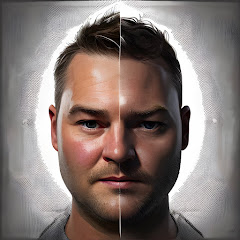
Rick Nielsen's Path to Financial Freedom: Web Design Millions to Passive Income
For many, the dream of financial freedom seems like a distant goal, often requiring years of grinding in traditional roles. But for seasoned entrepreneur Rick Nielsen, that dream became a reality through a remarkable journey that started with a multi-million dollar web design and hosting empire and evolved into a strategic shift towards passive income. His story is a masterclass in adapting to market changes, building unshakeable relationships, and defining success on your own terms. Learn how Nielsen navigated the wild west of the early internet, built a thriving business, survived an implosion, and now embraces a life of freedom and purpose.
Rick Nielsen's Entrepreneurial Roots
Nielsen’s entrepreneurial spirit ignited early. Growing up in a family that championed college and corporate retirement, Rick felt an innate desire for autonomy. He recounts, "I always had this desire to be able to do what I want when I wanted." This drive manifested in childhood ventures, from selling candy bars and gum at school to going door-to-door for Boy Scout tickets. At just ten years old, he tried to convince his dad to invest in military Jeeps from auctions for resale, a testament to his early eye for profit.
His path took an unexpected turn from aspiring architect to mechanic. However, it was during his time in mechanic school that he truly discovered the power of sales. Facing a failing grade in brakes, Rick struck a deal with his teacher: sell a 1963 British Sunbeam car in three days, and his D would become a C. He succeeded, and the revelation hit him: "Man, I can get what I want if I…" This ignited a passion for selling, leading him into the world of multi-level marketing with Primerica Financial Services, where he built a network of 1,200 representatives across four states.
Building a Web Design & Hosting Powerhouse
In 1998, after a brief hiatus from entrepreneurship, Rick stumbled upon the burgeoning internet. Though initially unimpressed by the text-only web, he quickly saw its potential. He started by selling and leasing computers, but a pivotal request changed his trajectory: a client asked if he could build a website. "I said, 'Hm. I bet I could figure that out,'" he recalls. This marked the beginning of his web design journey.
To establish his new web business, Nielsen offered his first five websites for free, requiring clients only to pay for hosting and domain names upfront. This strategy rapidly built a portfolio and reputation. His ventures expanded, including an eBay-like auction site for motors that secured funding before succumbing to the dot-com bubble crash. Undeterred, he moved to Kansas City, where his web design projects snowballed, attracting major corporate clients like Hallmark, Sprint, Black & Veatch, and DuPont. His business exploded, reaching revenues of over $100,000 a month.
The Implosion and the Shift to Passive Income
Success, however, came with a sharp lesson in business fragility. When his partner and then-wife, who managed programming and billing, had to leave for four months due to her father's cancer, Rick's multi-million dollar service business imploded. "It just proved to me at that time how fragile a service-related business can be," he explains. This setback prompted a deep re-evaluation of his business model.
Nielsen began researching passive income streams, recalling his earlier, brief success with affiliate marketing in 1999. He strategically started winding down the labor-intensive service business, or at least making it more manageable, and pivoted towards a hybrid model. Today, his focus is split 50/50 between select service work and passive income generators such as blogging, speaking, coaching, and affiliate marketing. He now outsources most client design work and is transitioning out of extensive hosting, though he still enjoys designing for his own projects, including a new podcast.
The "One Throat to Choke" Advantage
Nielsen's hosting model is a testament to the value of full-service solutions. As a reseller using platforms like Hostgator, Bluehost, WP Engine, and Rackspace, he personally administers most client accounts. He recounts a conversation with an older client who famously stated, "I just want one throat to choke." This became the cornerstone of Rick's approach.
My customers don't want to log into control panels, they don't want to do anything. I'm more of the full service to where if they need something, they just call me. And I can charge a lot more for that.
He emphasizes that clients prioritize convenience and reliability over price. His ability to translate complex technical concepts into easy-to-understand language has been crucial to his success. This hands-on, problem-solving approach ensures customer loyalty, allowing him to command premium rates while freeing up his clients to focus on their own businesses.
Mastering Relationships and Referrals
Perhaps one of the most surprising aspects of Nielsen's success in web design is his complete reliance on referrals. He never cold-called or advertised for his web business. In his small hometown, an initial direct mail piece for a meeting yielded no attendees, but the next day, a machine shop owner called, becoming a client for 16 years. When he moved to Kansas City, he knew only one person, yet built a multi-million dollar business solely through word-of-mouth.
His strategy was simple but powerful: build relationships with those who already had clients needing his services. He spent time having lunch and connecting with IT companies, printer repair services, networking specialists, and data centers. "I went and built the relationships with people who already had customers that needed those things," he explains. These strategic alliances proved invaluable, as they consistently referred business without Rick ever having to make a cold call or run an ad. Trust, built over time, became his most potent marketing tool.
Rick's Essential Entrepreneurship Advice
For aspiring entrepreneurs, Nielsen offers profound advice that transcends specific business models. He urges new entrepreneurs to become "very, very good students" but with a crucial caveat: don't get swept up in emulating every online guru.
Spending more time soul searching what it is that you want is way more important than whatever business model that you pick.
He stresses the importance of defining your personal vision and aligning it with your entrepreneurial pursuits. If your desires for your life aren't congruent with the business you're building, frustration is inevitable. Nielsen also challenges the conventional idea of "success," viewing it as an external label and an endpoint. He prefers terms like "vision, goal, or purpose," advocating for a continuous striving rather than a final arrival.
His practical advice includes setting "milestones" rather than just goals, seeking out specific experts for the skills needed at each stage, and avoiding information overload. He cites Tim Ferriss, who seeks information only when he needs it for a current project, as an example of focused learning to combat "paralysis of analysis" in the vast digital landscape.
Entrepreneurship: Freedom and the Bumpy Ride
Reflecting on his journey, Nielsen acknowledges that entrepreneurship is a mixed bag of "really good days" and "really crappy days." It's a path that builds character, especially when facing challenges like meeting payroll. Yet, the rewards, particularly the freedom to control one's time, far outweigh the difficulties.
He candidly shares his regret from his web design heyday: the 13 or 14 years spent working 16-18 hour days, during which he remembers "very little of my personal life because I didn't have any." While hard work is essential at the outset, he advises entrepreneurs to strategically build businesses that eventually afford them time for life's most important moments. As he puts it, "Enjoy the ride. Because the ride's going to be bumpy. And it's going to be fun." Ultimately, he prefers "entrepreneur problems" over "job problems," a sentiment that perfectly encapsulates the allure of self-determination.
Frequently Asked Questions
How did Rick Nielsen start his web design business?
Rick Nielsen started his web design business in 1998 by initially selling and leasing computers. When a client asked him to build a website, he taught himself how, then offered his first five websites for free (charging only for hosting and domain) to quickly build a client base and reputation.
What is the "one throat to choke" business model?
The "one throat to choke" model, as Rick Nielsen describes it, is a full-service approach where he handles all aspects of web design, hosting, and related technical support for his clients. Clients only need to contact him for any issue, allowing him to charge premium prices for convenience and comprehensive service, rather than clients managing multiple vendors or technical tasks themselves.
What was Rick Nielsen's key advice for new entrepreneurs?
Rick Nielsen advises new entrepreneurs to first and foremost soul-search and define what they truly want out of life and business, ensuring their chosen business model aligns with this personal vision. He also emphasizes focusing on building relationships and acquiring specific skills needed at each stage, rather than getting overwhelmed by excessive information or trying to emulate others' paths.
Key Takeaways from Rick Nielsen
Rick Nielsen's journey from a multi-million dollar web design business to a passive income lifestyle offers invaluable lessons for any aspiring entrepreneur. His story underscores the power of relationships, the importance of adaptability, and the profound freedom that comes from defining your own path. For more insights into financial freedom strategies and entrepreneurial wisdom, explore other expert interviews and resources from Daniel Mac Sweeney on blokstreams.com.
This article is based on this video by Daniel Mac Sweeney, learn more at their website. Written and published automatically.
Comments
Be the first to comment.